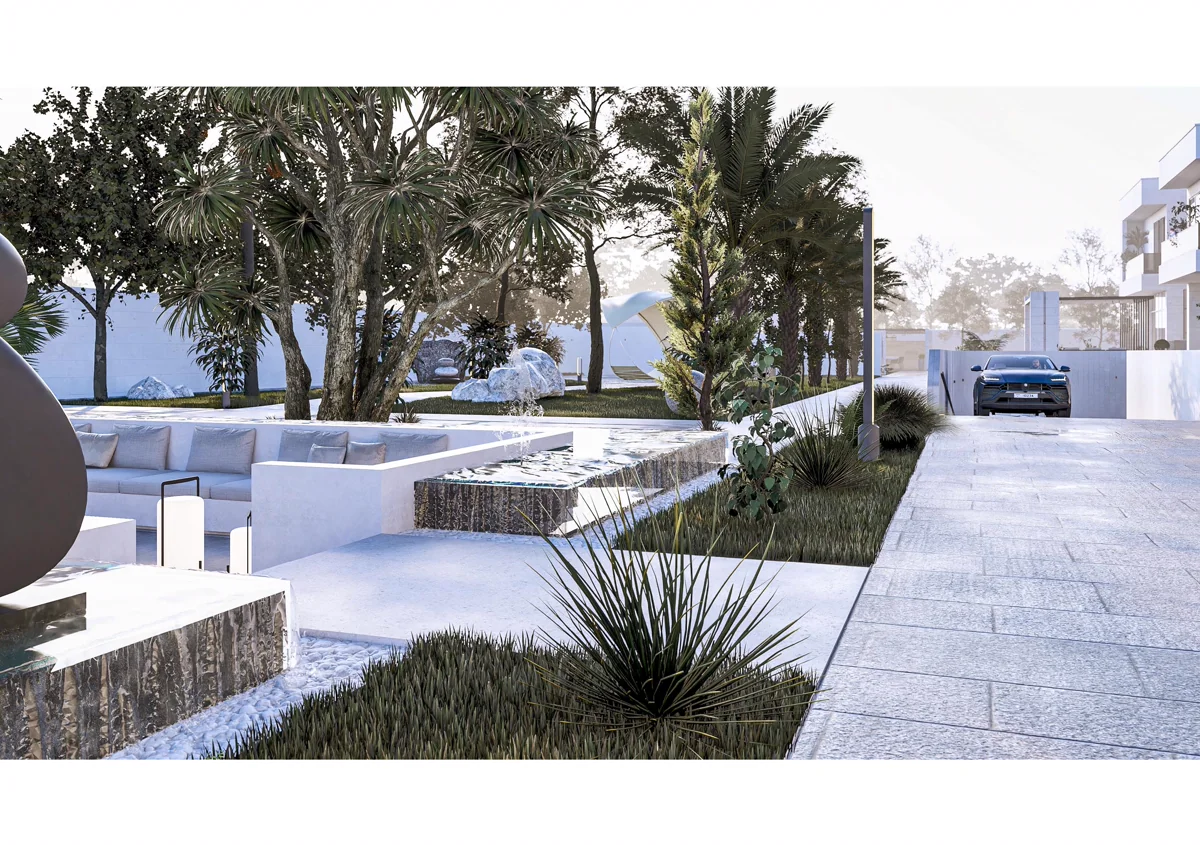
Dubai in 2026 is not the same city it was a decade ago. Homeowners are no longer satisfied with grand scale alone. They want to feel something inside their home – calm, connection, a sense that the space breathes with them rather than against them. Biophilic design is the architectural philosophy answering that demand, and it is reshaping how luxury villas and residences are being conceived across the UAE.
What Biophilic Design Actually Means
The term comes from the Greek word for life. At its core, biophilic design is the intentional integration of natural elements, natural light, organic materials, and living systems into the built environment. It is not placing a few potted plants in a corner. It is a design philosophy embedded from the earliest concept drawings, influencing orientation, material choices, spatial flow, and the way a home handles light across the full arc of a day.
Research from the University of Exeter found that people living and working in environments rich in natural elements reported measurably higher wellbeing, lower stress, and stronger focus. In a city like Dubai, where summers push residents indoors for months, the quality of that interior environment carries enormous weight.
How Dubai’s Climate Shapes the Approach
Biophilic design in Dubai requires a different conversation than biophilic design in London or Singapore. The approach cannot simply be transplanted. Passive ventilation that works beautifully in a temperate climate can introduce unbearable heat gain here without careful orientation and shading strategy. This is exactly where working with an experienced architecture firm in Dubai matters. The principles remain universal, but the execution is entirely local.
In practice, this means biophilic villa design in Dubai in 2026 leans heavily on several specific strategies.
Controlled natural light is perhaps the most powerful biophilic tool available in the UAE. Floor to ceiling glazing on north facing elevations floods interiors with warm indirect light without the solar gain of direct southern exposure. Clerestory windows pull light deep into rooms while keeping lower wall sections solid for insulation. Carefully placed skylights over double height spaces create the sensation of being under open sky without thermal compromise.
Water features as interior elements have deep roots in Islamic architecture, and biophilic design brings this tradition forward in a contemporary context. Courtyard fountains, indoor water walls, and reflecting pools positioned to catch natural light are not merely decorative. The sound of moving water reduces psychological stress and creates the layered sensory experience that makes a space feel genuinely alive.
Living walls and green corridors are increasingly being designed into Dubai villas from the structural stage rather than added as an afterthought. A living wall built into a load bearing interior elevation with a dedicated irrigation system is a fundamentally different proposition to a standalone planter structure. It requires planning at the villa design stage, with MEP systems accommodating water supply and drainage routes.
The Materials Conversation
Biophilic design is also a materials conversation. Stone, timber, rattan, raw concrete with visible aggregate, woven textiles — these surfaces engage a different sensory response than polished porcelain or lacquered cabinetry. Tactile variety matters. A home where every surface is smooth, reflective, and hard creates a very specific psychological environment, even if it photographs beautifully.
In luxury villa interior design in Dubai, the shift toward biophilic material palettes is visible across high end residential projects in 2025 and 2026. Travertine is back not as a trend but as a material with genuine warmth and texture. Timber in ceiling soffits and built in joinery brings acoustic softness alongside visual warmth. Even the colour palette shifts, moving from cool whites and greys toward sand, terracotta, sage, and the deeper browns of natural wood.
Indoor to Outdoor as a Design Principle, Not a Feature
One of the most important structural decisions in a biophilic villa is how the interior connects to the landscape. In Dubai, this is rarely simple. The outdoor space needs to be designed to be usable in the cooler months while still providing visual connection and a sense of spaciousness during the intense summer heat.
This is an argument for integrating residential architecture and landscape design from day one rather than treating the garden as a separate afterthought once construction is complete. Shaded terraces with louvred pergolas, planted buffer zones between the pool terrace and the villa boundary, and covered outdoor dining rooms that function as transitional spaces between inside and outside, all require coordination between the architectural layout and the landscape plan from the earliest design stages.
Is Biophilic Design More Expensive?
This is the question most villa owners ask, and the honest answer is: it depends entirely on how and when it is introduced. A living wall specified at concept stage costs a fraction of what the same feature costs when retrofitted into a completed villa. Glazing specified for orientation and solar performance from the start avoids the double cost of adding shading elements later. Sustainable villa design and biophilic design share this logic — decisions made early are investments, decisions made late are expenses.
For clients planning a new build or a substantial villa renovation in Dubai, 2026 is an opportune moment. Material availability has improved significantly post supply chain disruptions, and there is now a genuine body of completed projects in the UAE demonstrating what biophilic design looks and feels like at scale in this climate.
Working With the Right Studio
Biophilic design is not a style applied at the end of a project. It is a discipline built into the design process from site analysis through to the specification of every material and fitting. If you are planning a villa in Dubai and want to understand how these principles can be integrated into your specific plot, orientation, and lifestyle, the conversation starts with your architect.
Book a consultation with Al Mujassam Architects to discuss how biophilic design principles can be woven into your upcoming project from the ground up.